
Care guide
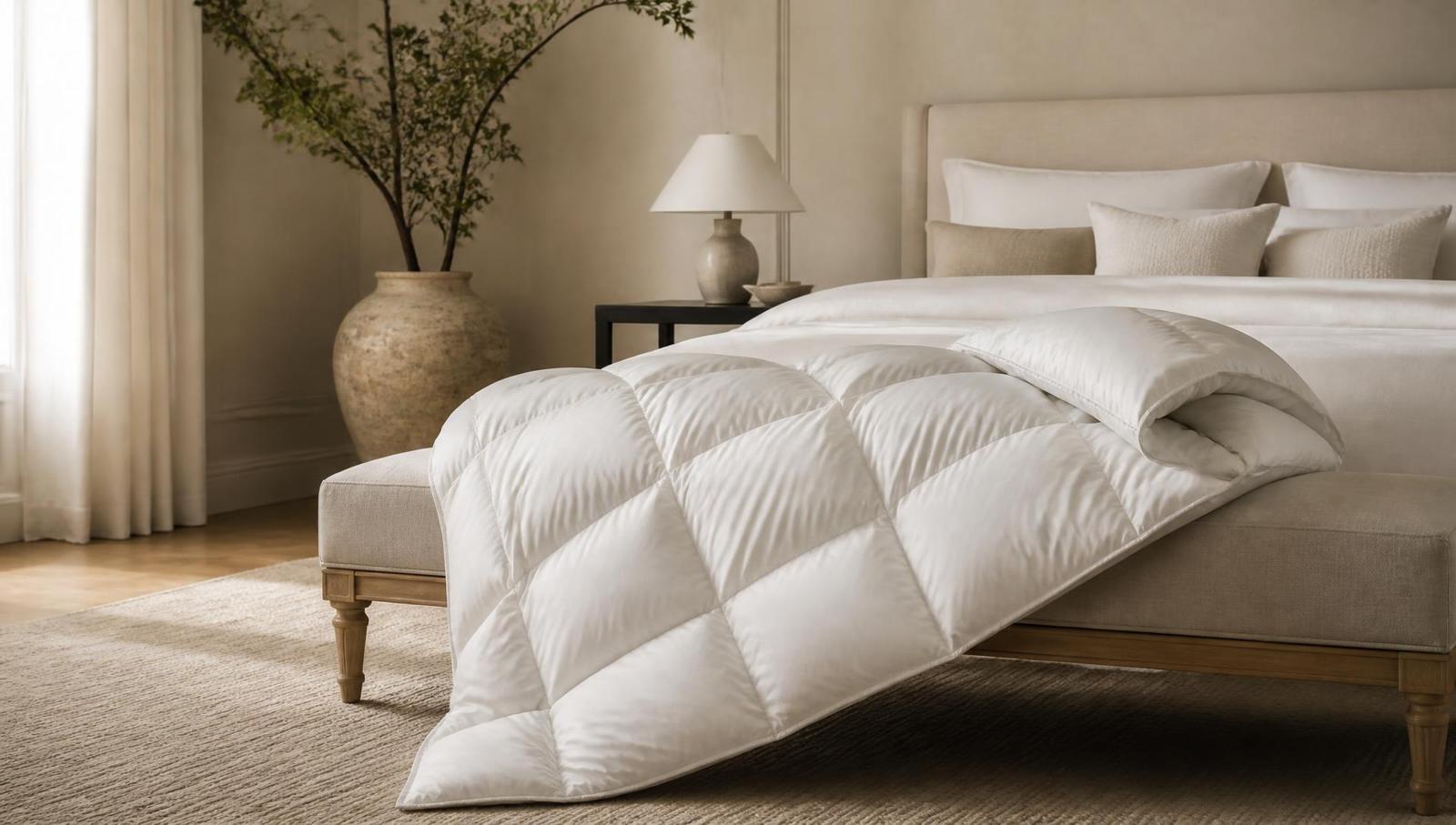
A little attention, many years of loft
Plumés bedding is built to outlast seasonal trends. With the right care, your pillow or comforter should keep its shape, loft, and quiet comfort for years. Here is everything we tell our own clients.
By the piece
Find your piece
Choose what you own for the short, specific version. The chapters below go deeper.

Know what is inside
Natural down is the light, resilient layer beneath the feathers of ducks and geese. It traps air in thousands of tiny clusters, which is what gives a pillow or comforter its loft and warmth without weight.
Our down-alternative fill is made from recycled, hypoallergenic fibres that mimic the same airy structure. It is a practical choice for sleepers who prefer a non-animal fill, and it responds to care in much the same way.
Both fills need the same two things: room to expand, and a dry, breathable environment. Compression and trapped moisture are the real enemies.
- Down clusters trap air; do not compress them long-term
- Down alternative mimics the same lofted structure
- Moisture and compression are what shorten a piece's life
Fluff, shake, and protect
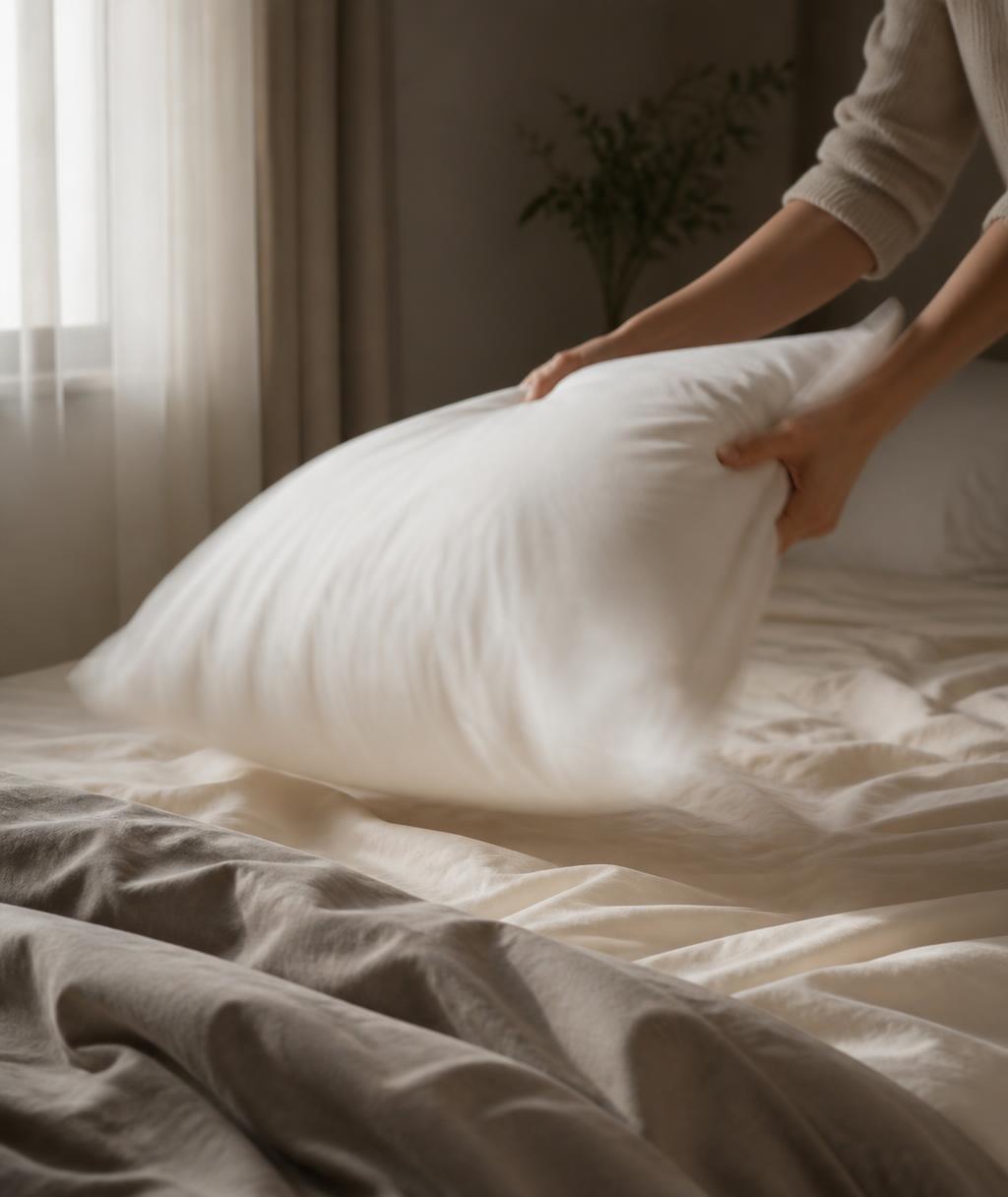
The simplest way to extend the life of your bedding is to fluff it daily. Shake your pillows and give your comforter a gentle snap. This redistributes the fill, prevents it from settling into seams, and restores the loft you felt on the first night.
A breathable cotton protector is the best insurance against dust, oils, and small spills. Wash the protector regularly and let the down piece inside breathe.
Air your bedding now and then. A few hours in fresh, dry air refreshes the fill and keeps the shell crisp.
- Fluff pillows and comforters daily to redistribute fill
- Use breathable cotton protectors and wash them often
- Air out bedding in a dry, shaded spot
Wash it gently, dry it thoroughly
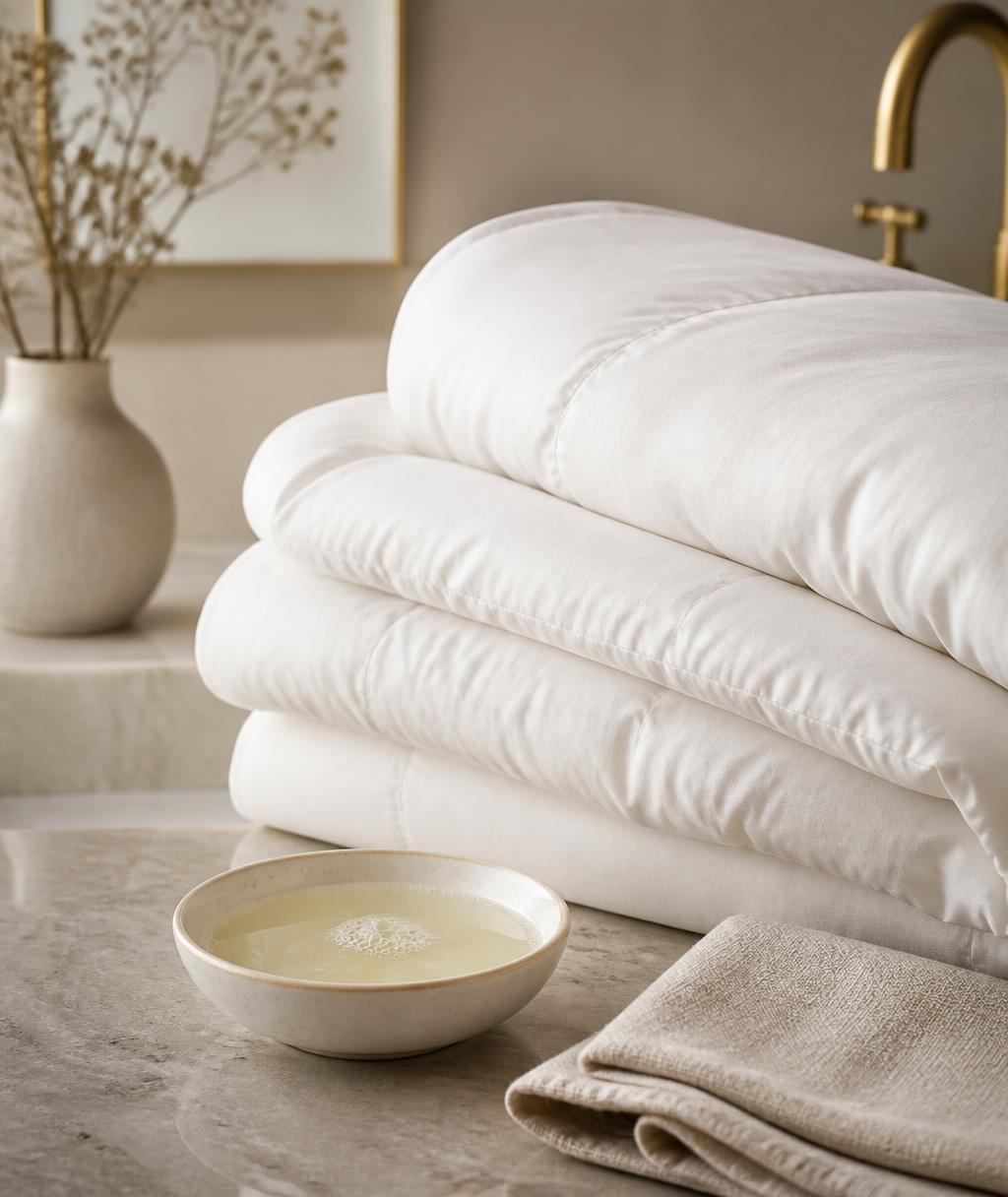
Down is surprisingly washable, but it asks for patience. For small stains, spot clean with a mild detergent and a barely damp cloth, blotting rather than rubbing.
When the whole piece needs washing, use a large front-loading machine on a gentle cycle with cold water and a down-safe or mild detergent. Avoid top-loaders with agitators, which can tear baffle boxes and compress clusters.
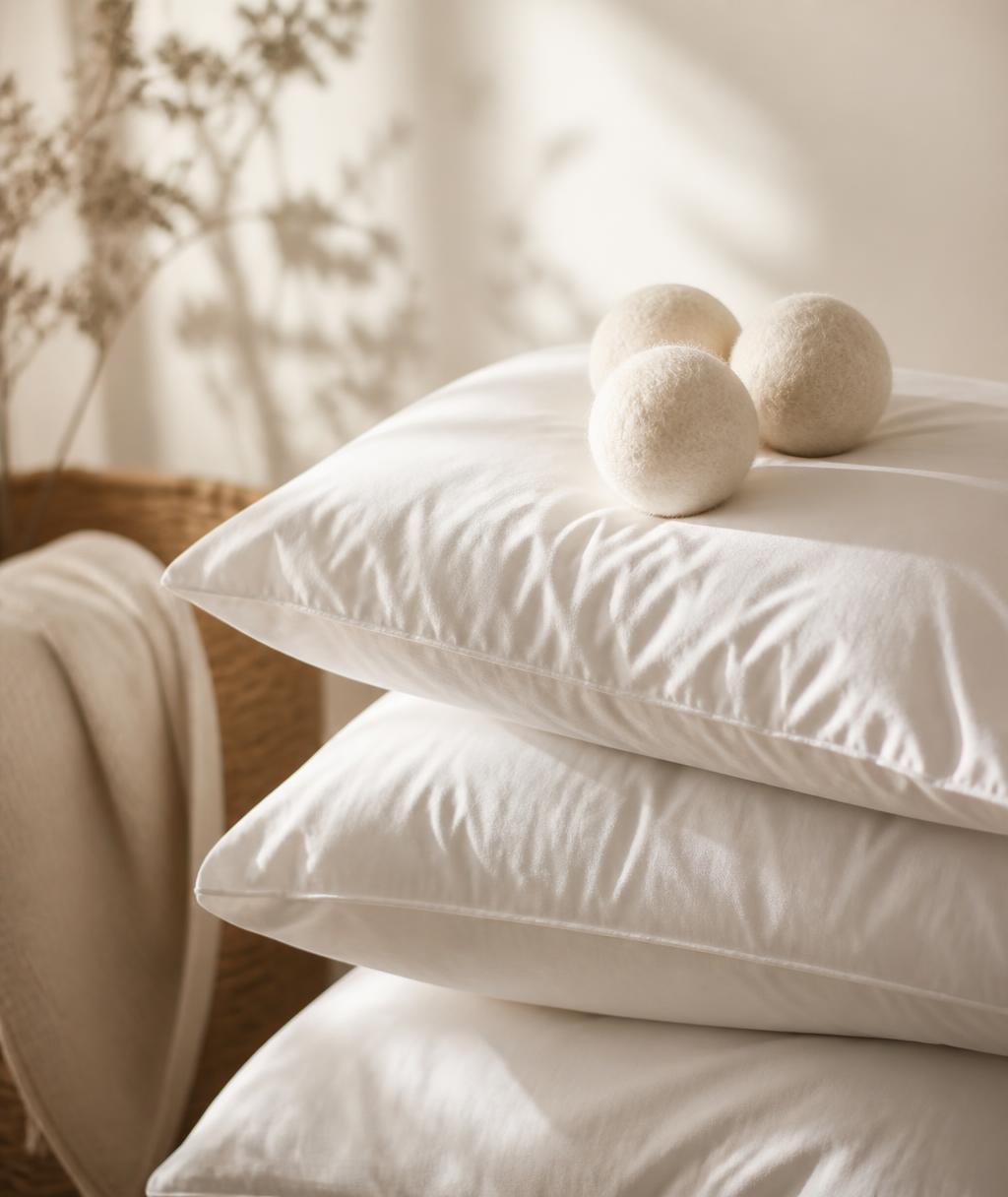
Drying is the most important step. Use a large-capacity dryer on low heat, add two or three clean tennis balls or dryer balls to break up clumps, and keep going until the piece is completely dry. Any lingering moisture can lead to mildew. If you are unsure, a cleaner who specializes in down is worth the cost.
- Spot clean small stains by blotting, not rubbing
- Machine wash in a front-loader on gentle with cold water
- Dry on low heat with dryer balls until fully dry
- Professional down cleaning is the safest option for large comforters
A gentler cycle
Down-alternative fill is less temperamental than natural down, but it still benefits from a gentle approach. Wash in a front-loading machine on a delicate cycle with cold water and a mild detergent free of harsh enzymes or bleach.
Dry on low or medium-low heat with dryer balls to keep the fibres from clumping. Remove the piece while it is still slightly warm and give it a shake to finish redistributing the fill.
- Use a delicate cycle with cold water
- Choose a mild, enzyme-free detergent
- Dry on low heat with dryer balls
- Shake while warm to restore loft
Let it breathe
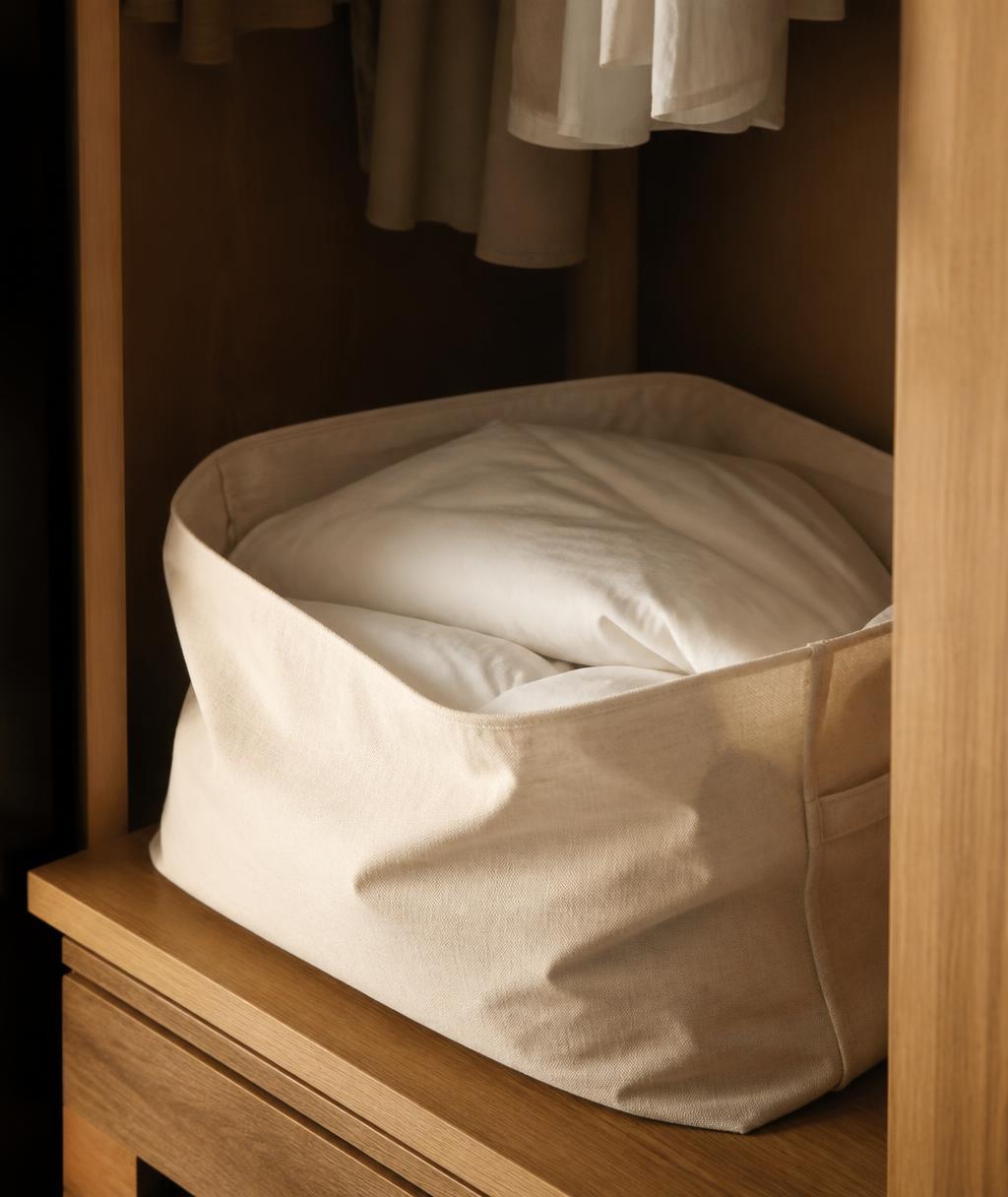
Store your bedding in a breathable cotton or linen bag, never in plastic. Plastic traps humidity, which can lead to mildew and stale odors.
Avoid storing down compressed for long periods. Vacuum bags are fine for a short move, but months of compression will crush clusters and fibres alike. If space is tight, fold loosely and place on a closet shelf in a cool, dry spot.
- Use breathable cotton or linen storage bags
- Never store in plastic long-term
- Avoid compression; vacuum bags are only for short-term moves
- Keep in a cool, dry place
Air first, treat gently
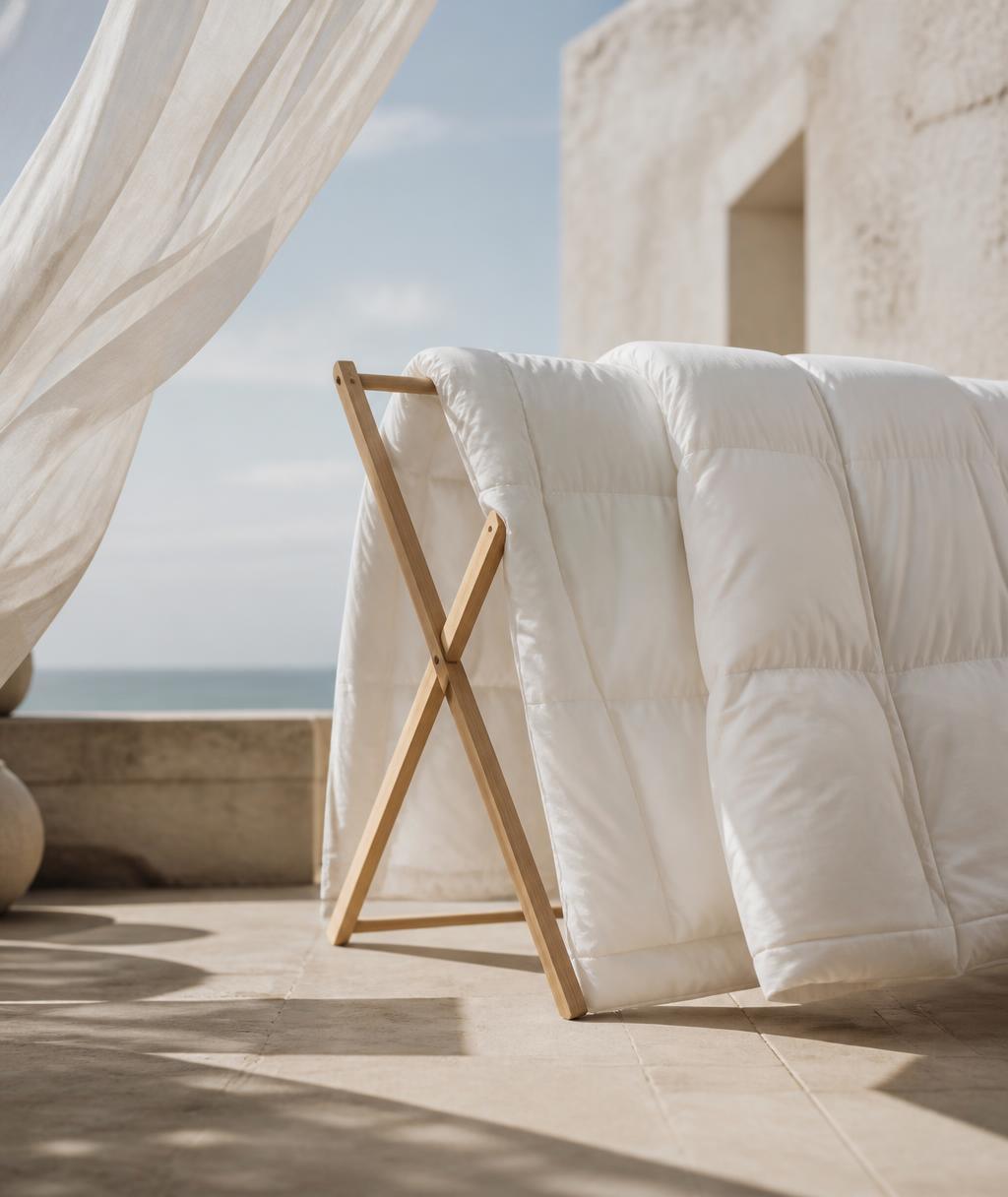
If your pillow or comforter develops a faint odor, start with fresh air. Hang it outside on a dry, breezy day, or lay it near an open window. Sunlight and moving air do more than most sprays.
For persistent odors, mist lightly with a gentle fabric spray or a diluted solution of water and a drop or two of essential oil. Test on a small, hidden area first, and never saturate the fill.
- Air out in a dry, breezy spot before anything else
- Use a light fabric spray if needed
- Test any spray on a hidden area first
- Never saturate the fill
Cotton sateen, kept crisp
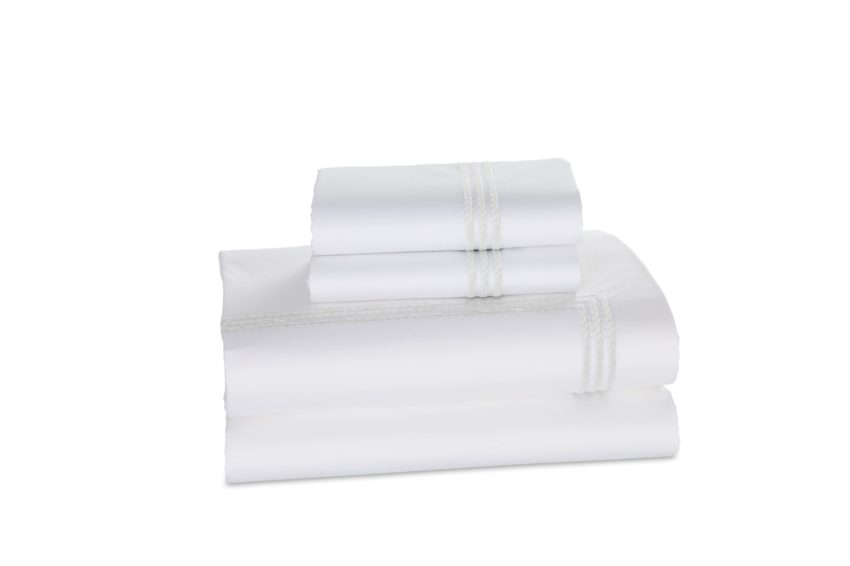
Our Windsor sheeting is a 400 thread count, 100% cotton sateen with braided embroidery along the borders. Sateen rewards gentle, frequent laundering: warm or cool water, a mild detergent, and no bleach or fabric softener, which coats the fibres and dulls the sheen.
Wash your linens on their own, or with like colors only. A loosely loaded machine matters more than the cycle, sheets need room to move, or they twist and crease along the same lines every wash.
Tumble dry on low and remove them while still faintly damp. That is when sateen releases its creases, whether you press it or simply smooth it onto the bed. Iron on a medium setting on the reverse side, and keep the iron off the embroidered borders.
- Machine wash warm or cool with a mild detergent, no bleach
- Skip fabric softener, it dulls the sateen sheen
- Wash separately or with like colors; do not overload the drum
- Tumble dry low and remove slightly damp to release creases
- Press on the reverse; avoid ironing directly over the embroidery
Quick reference
The short version
- Fluff daily and use breathable protectors
- Wash in a front-loader on gentle with cold water
- Dry thoroughly on low heat with dryer balls
- Store in breathable bags, never compressed for long
- Air out first; treat odors gently and sparingly
- Wash linens often on warm, dry low, and finish slightly damp
Questions?
We are happy to talk you through it
Every piece is made to be lived with for years. If you are unsure whether to wash, dry clean, or simply air something out, call or text us and we will walk you through it.