
Three words, three things
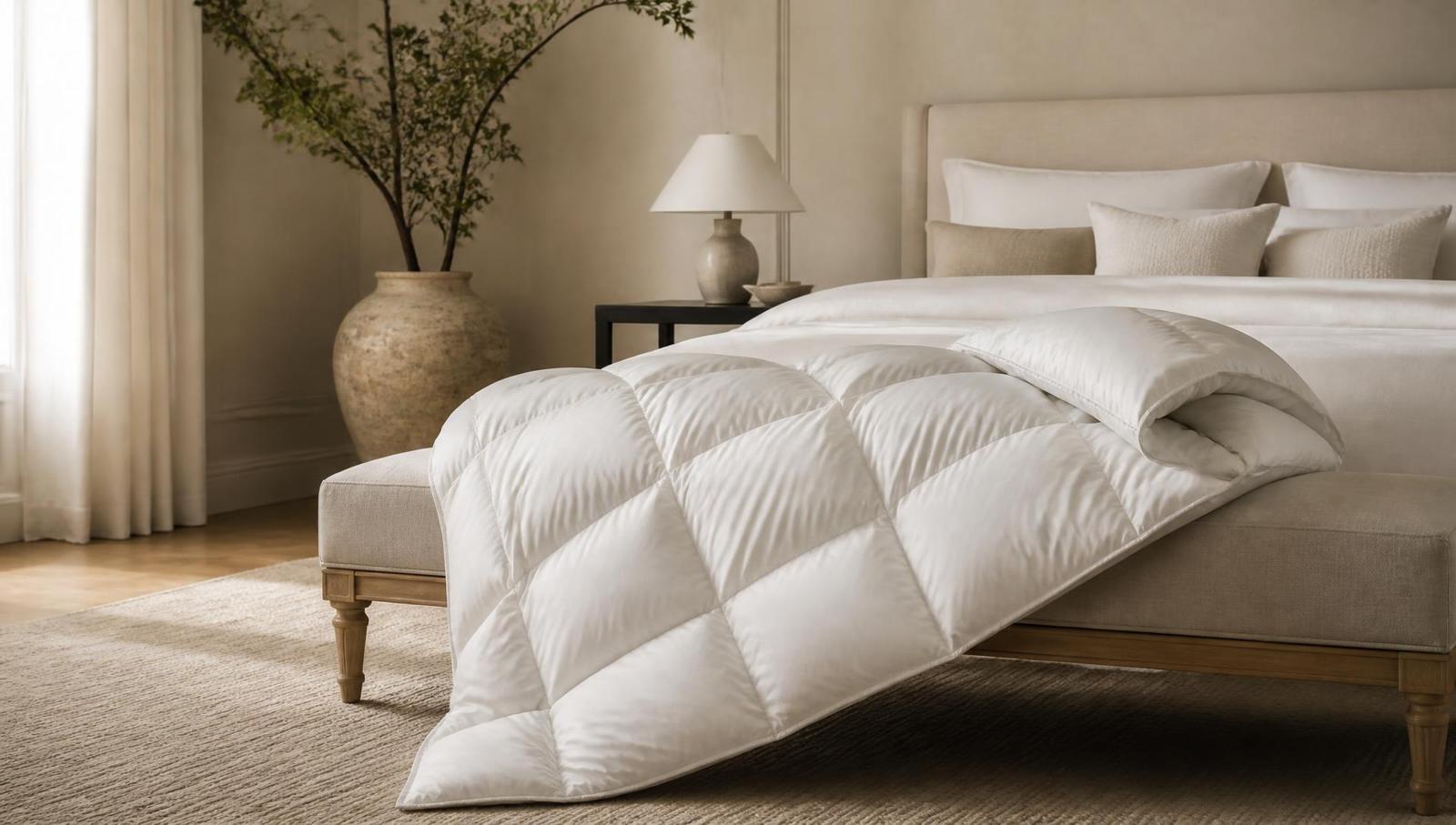
A comforter is a filled quilt: a shell of down-proof cotton with down or down alternative inside, held in baffle-box chambers so the fill cannot drift. It is finished on the outside and can be used on its own.
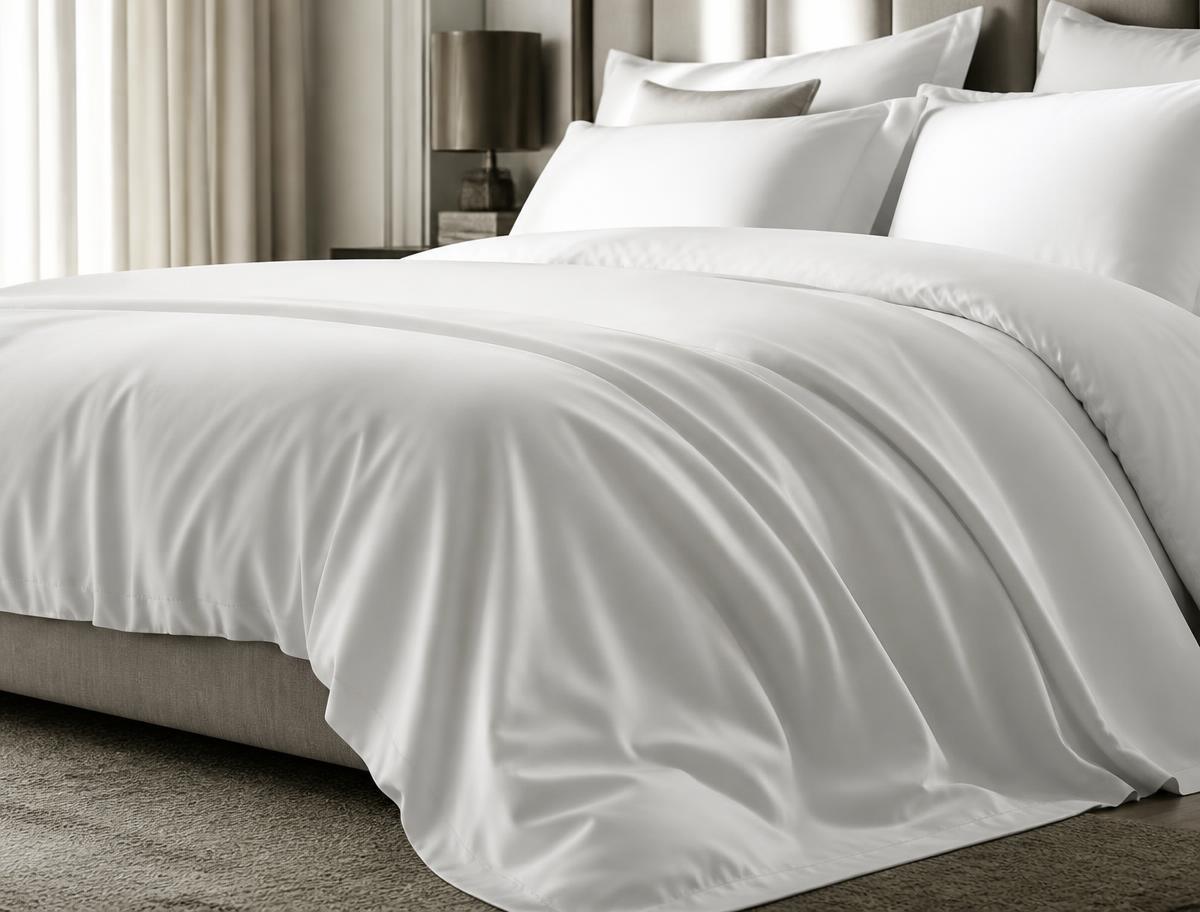
A duvet, in European usage, is the same object, a filled insert, and a duvet cover is the case that goes over it and buttons or ties closed. The cover is what you launder with your sheets.
Why we recommend using a cover
A down comforter lasts far longer when it is not being laundered constantly, and a cotton cover is the simplest way to avoid that. You wash the cover with your sheets and the comforter itself needs cleaning only once or twice a year.
A cover also changes the look of a bed without changing the bedding underneath. The same All Year Weight comforter can read navy in winter and white in summer.
- Protects the shell and the down from body oils and washing
- Lets you change the bed's colour without buying new fill
- Keeps care simple: cover in the machine, comforter rarely
Pairing a cover with the right comforter
Choose the comforter first, since that decides how the bed sleeps: warmth weight for the room, then fill power for how light that warmth feels. Only then choose the cover for the look.
Size the cover to the comforter, not the mattress. If you sized the comforter up for a better drape - which we usually suggest - the cover has to go up with it, or the fill will be compressed at the corners.
- Warmth weight follows the bedroom: Summer, All Year or Winter
- Duvet cover size follows the comforter size
- Corner ties keep the insert from sliding inside the cover
So which do you buy
Both, in almost every case: a comforter for warmth and a cover to protect and dress it. Going without a cover is reasonable only if you are happy to launder the comforter itself more often and want the plain white shell on show.